Brown v. Davenport
Petitioner Mike Brown, Acting Warden · Respondent Ervine Davenport
- Reporter
- 596 U.S. ___ (2022)
- From
- United States Court of Appeals for the Sixth Circuit
- How it got here
- writ of <i>certiorari</i>
What is the appropriate standard of review for a federal court deciding whether to grant habeas relief?
Question before the CourtWhat happened
A Michigan jury convicted Ervine Lee Davenport of first-degree murder in 2008. He challenged his conviction in a habeas corpus petition under 28 U.S.C. § 2254 because at trial he was restrained at the waist, wrist, and ankles, although there was a privacy curtain around the defense table. The State admitted that the visible restraints were unconstitutional but argued that the error was harmless. The Michigan Court of Appeals agreed, finding that while it was error for the trial court to order the defendant to be restrained without justification, Davenport had not shown that his restraints were visible to the jury and thus failed to show prejudice. The Michigan Supreme Court reversed and remanded, and on remand, five jurors testified that they saw the shackles and two others had heard comments about the shackles. Nevertheless, the trial court concluded that although some jurors saw the shackles, the prosecution had proved beyond a reasonable doubt that the shackling did not affect the jury’s verdict. The court of appeals affirmed, and the Michigan Supreme Court denied leave to appeal. Davenport challenged the conviction in federal court, and the district court denied the petition and certificate of appealability. Davenport petitioned the U.S. Court of Appeals for the Sixth Circuit for a certificate of appealability, which the court granted. Noting that “shackling is inherently prejudicial,” the Sixth Circuit concluded that the State had not met its burden to show that the restraints did not have a “substantial and injurious effect or influence in determining the jury’s verdict” and reversed.
6–0.
A narrow margin — the Court split hard on this one. Read the concurrences carefully.
The opinions 2

Neil Gorsuch
Joined by Roberts, Thomas, Alito, Kavanaugh, and Barrett.
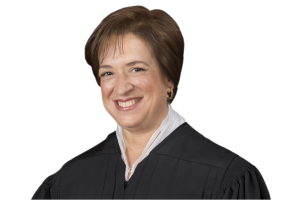
Elena Kagan
Joined by Breyer and Sotomayor.
The holding
A federal court deciding whether to grant habeas relief must apply both the test the Supreme Court outlined in Brecht v. Abrahamson, 507 U.S. 619, and the one Congress prescribed in the Antiterrorism and Effective Death Penalty Act of 1996 (AEDPA). Justice Neil Gorsuch authored the 6-3 majority opinion of the Court holding that the Sixth Circuit erred in granting relief based solely on its application of the Brecht standard. Since the founding, Congress has authorized (but not required) federal courts to issue writs of habeas corpus “as law and justice require.” In response to an evolving use of the writ, the Supreme Court in Brecht v. Abrahamson held that a state prisoner seeking federal habeas relief must show that the constitutional error had a “substantial and injurious effect or influence on the verdict.” Congress subsequently further reformed the writ in passing AEDPA, which is a constitutionally valid rule of decision. AEDPA instructs that federal courts shall not grant relief for a claim adjudicated in state court unless the state court’s decision was (1) contrary to clearly established law or (2) based on an unreasonable determination of the facts. Notably, Congress left intact the tradition whereby federal courts have discretion to grant relief if “law and justice require.” The test outlined in Brecht is different from the requirements of AEDPA; proof of prejudice under Brecht does not satisfy AEDPA. Moreover, the materials a court may consult when considering each test are different. As such, a court must apply both tests when reviewing a habeas claim. Justice Elena Kagan authored a dissenting opinion, in which Justices Stephen Breyer and Sonia Sotomayor joined. Justice Kagan argued that the Court twice, in 2007 and again in 2015, stated that the Brecht standard “obviously subsumes” the “more liberal” AEDPA standard and that if a defendant meets the former, he will “necessarily” meet the latter, too. Justice Kagan pointed out that every Justice has subscribed to that position in prior decisions and that requiring courts to apply both tests is unnecessarily burdensome and “will never lead to a different result” from application of the Brecht test alone.
Argued by
- Fadwa A. Hammoud For the Petitioner
- Tasha Bahal For the Respondent
Case path
- Apr 5, 2021 granted
- Oct 5, 2021 argued
- Apr 21, 2022 decided