Thompson v. Clark
Petitioner Larry Thompson · Respondent Pagiel Clark, et al.
- Reporter
- 596 U.S. ___ (2022)
- From
- United States Court of Appeals for the Second Circuit
- How it got here
- writ of <i>certiorari</i>
Must a plaintiff who seeks to bring a Section 1983 action alleging unreasonable seizure pursuant to legal process show that the criminal proceeding against him “formally ended in a manner not inconsistent with his innocence,” or that the proceeding “ended in a manner that affirmatively indicates his innocence”?
Question before the CourtWhat happened
Camille Watson was staying with her sister and her sister’s husband, Larry Thompson, when she dialed 911 after seeing a diaper rash on the couple’s infant daughter and mistaking the rash for signs of abuse. In response, two Emergency Medical Technicians (EMTs) arrived at Thompson’s apartment building to investigate. The EMTs saw nothing amiss, and, unaware of Camille’s 911 call, Thompson told the EMTs that no one in his home had called 911. He asked the EMTs to leave, and they did. Four police officers followed up to investigate the alleged child abuse and insisted on seeing Thompson’s daughter. Thompson asked to speak to the officers’ sergeant, and after being denied that request, asked whether the officers had a warrant (which they did not). Nevertheless, they physically tried to enter Thompson’s home, and when Thompson attempted to block the doorway, the officers tackled and handcuffed him. He was arrested and taken to jail, where he spent two days. He was charged with resisting arrest and obstructing governmental administration, and about three months later, the prosecution dropped the charges against him, stating that “People are dismissing the case in the interest of justice.” Thompson filed a Section 1983 malicious prosecution claim against the police officers involved. A federal district court granted judgment as a matter of law in favor of the defendants on Thompson’s malicious prosecution claim due to his failure to establish favorable termination of his criminal case, which is required under binding Second Circuit precedent. The appellate court affirmed.
Cross-aisle coalition.
The split did not track the usual ideological lines — justices from both wings landed on the same side.
The opinions 2
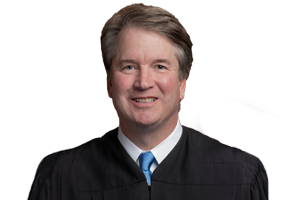
Brett M. Kavanaugh
Joined by Roberts, Breyer, Sotomayor, Kagan, and Barrett.

Samuel A. Alito Jr.
Joined by Thomas and Gorsuch.
The holding
A plaintiff wishing to bring a Section 1983 claim for malicious prosecution, need only show that his prosecution ended without a conviction. Justice Brett Kavanaugh authored the 6-3 majority opinion holding that Thompson satisfied that requirement and reversing the judgment of the lower court. To succeed on a claim of malicious prosecution under Section 1983, a plaintiff must show: (1) the suit or proceeding was instituted without probable cause, (2) the motive in instituting the suit was malicious—that is, for a purpose other than bringing the defendant to justice, and (3) the prosecution terminated in the acquittal or discharge of the accused. The purposes of this third element—favorable termination of the underlying criminal case—are: (a) to avoid parallel civil and criminal litigation, (b) to prevent inconsistent civil and criminal judgments, and (c) to prevent civil suits from being improperly used as collateral attacks on criminal proceedings. Most American courts have considered a favorable termination to mean simply a prosecution that ends without conviction and cannot be revived. Thus, if the prosecutor abandons the case or the court dismisses the case without stating a reason, these satisfy the third element of a malicious prosecution claim. Acquittal of the defendant is not required. Respondents’ claims to the contrary are not persuasive. Justice Samuel Alito authored a dissenting opinion, in which Justices Clarence Thomas and Neil Gorsuch joined. Justice Alito argued that the majority’s analysis is cursory and erroneously relies on lower court cases “heavily influenced by a mistaken reading of the plurality opinion in Albright v. Oliver, 510 U.S. 266 (1994).”
Argued by
- Amir H. Ali for the Petitioner
- Jonathan Y. Ellis for the United States, as amicus curiae, supporting the Petitioner
- John D. Moore for the Respondents
Case path
- Mar 8, 2021 granted
- Oct 12, 2021 argued
- Apr 4, 2022 decided