Cameron v. EMW Women’s Surgical Center
Petitioner Daniel Cameron, Attorney General of Kentucky · Respondent EMW Women's Surgical Center, P.S.C., et al.
- Reporter
- 595 U.S. ___ (2022)
- From
- United States Court of Appeals for the Sixth Circuit
- How it got here
- writ of <i>certiorari</i>
Should a state attorney general vested with the power to defend state law be permitted to intervene after a federal court of appeals invalidates a state statute when no other state actor will defend the law?
Question before the CourtWhat happened
Dilation and extraction (D&E) is the standard method of abortion used in the second trimester of pregnancy, accounting for 95% of second-trimester abortions nationwide. Kentucky House Bill 454 requires patients to undergo a procedure to end potential fetal life before they may receive an abortion using the D&E method. Kentucky’s only abortion clinic and two of its doctors filed a lawsuit challenging the law, arguing that it violates patients’ constitutional right to abortion prior to fetal viability. All defendants except then-Secretary of Kentucky’s Cabinet for Health and Family Services, Adam Meier, and Commonwealth Attorney Thomas B. Wine, were voluntarily dismissed prior to trial. After a five-day bench trial, the district court ruled for the plaintiffs and entered a permanent injunction. In the meantime, governor Matt Bevin was replaced by Andy Beshear and Meier was replaced by Eric Friedlander. On appeal, the U.S. Court of Appeals for the Sixth Circuit affirmed the district court, and the new Health Secretary declined to continue defending the law. Daniel Cameron, the Kentucky attorney general, asked the Sixth Circuit for permission to intervene to defend the law, but the court declined.
Unanimous.
All nine justices agreed on the outcome. Concurrences may differ on reasoning, but the Court spoke with one voice on the judgment.
The opinions 4
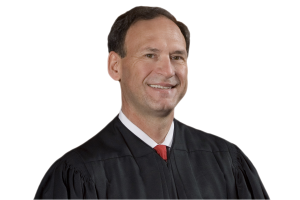
Samuel A. Alito Jr.
Joined by Roberts, Gorsuch, Kavanaugh, Barrett, and Breyer.
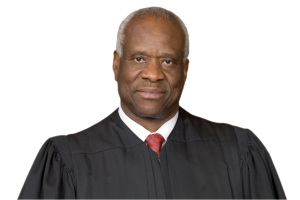
Clarence Thomas
Joined by Roberts, Gorsuch, Kavanaugh, Barrett, and Breyer.
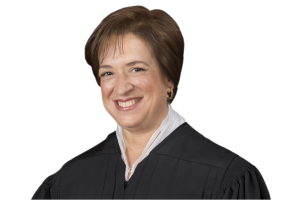
Elena Kagan
Joined by Roberts, Gorsuch, Kavanaugh, Barrett, and Breyer.
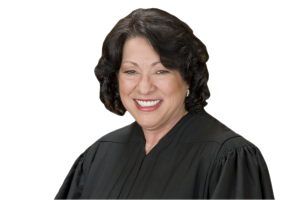
Sonia Sotomayor
Alone.
The holding
The Kentucky attorney general should have been permitted to intervene on the Commonwealth’s behalf in litigation concerning Kentucky House Bill 454. Justice Samuel Alito wrote the opinion on behalf of the 6-3 majority. Justices Elena Kagan and Stephen Breyer concurred in the judgment but did not join the majority opinion. No provision of law limits the jurisdiction of federal appellate courts to allow intervention by a party who was not part of the litigation—the state attorney general in this case. Nor is there a mandatory claims-processing rule that precludes the attorney general’s intervention. Contrary to the conclusion of the court below, the attorney general’s motion to intervene was not “untimely,” as he filed as soon as the secretary for Health and Family Services decided not to defend the law. Finally, allowing the attorney general to intervene would not cause unfair prejudice to the parties, so the appellate court erred in denying the attorney general’s motion to intervene. Justice Clarence Thomas authored a concurring opinion making the additional point that the attorney general was not a “party” to the district court’s final judgment thus negating a premise of the respondents’ jurisdictional argument. Justice Kagan, joined by Justice Breyer, concurred in the judgment because, in their view, granting the attorney general’s motion to intervene would not be an “end-run around the timely-appeal rule” but a product of the timing of the litigation and a new need for the attorney general to enter the suit. Justice Sonia Sotomayor dissented, arguing that while the majority acknowledges that courts have “sound discretion” to permit or disallow intervention, it “nonetheless bends over backward to accommodate the attorney general’s reentry into the case.” Justice Sotomayor expressed concern that the decision would broadly allow government officials to “evade the consequences of litigation decisions made by their predecessors of different political parties.”
Argued by
- Matthew F. Kuhn for the Petitioner
- Alexa Kolbi-Molinas for the Respondents
Case path
- Mar 29, 2021 granted
- Oct 12, 2021 argued
- Mar 3, 2022 decided