Cassirer v. Thyssen-Bornemisza Collection Foundation
Petitioner David Cassirer · Respondent Thyssen-Bornemisza Collection Foundation
- Reporter
- 596 U.S. ___ (2022)
- From
- United States Court of Appeals for the Ninth Circuit
- How it got here
- writ of <i>certiorari</i>
Should a federal court hearing state law claims under the Foreign Sovereign Immunities Act apply the forum state’s choice-of-law rules or federal common law to determine what substantive law governs the claims at issue?
Question before the CourtWhat happened
David Cassirer and others filed a lawsuit to recover a painting by French Impressionist painter Camille Pissarro, which was stolen from their ancestors by the Nazi regime in 1939. The district court originally granted summary judgment in favor of Thyssen-Bornemisza Collection Foundation (TBC), but the U.S. Court of Appeals for the Ninth Circuit reversed and remanded, holding that the court needed to determine, as a threshold matter, whether TBC had actual knowledge the painting was stolen. If it had such knowledge, then it could be an accessory after the fact under Spanish Civil Code Article 1956. On remand, the district court determined that TBC did not have actual knowledge that the painting was stolen when it purchased the painting in 1993. Cassirer again appealed, arguing among other things the Ninth Circuit’s earlier decision erred in holding that Spanish law governs the substantive claims. The Ninth Circuit affirmed the lower court, finding no factual or legal developments that would justify revisiting its original holding.
Unanimous.
All nine justices agreed on the outcome. Concurrences may differ on reasoning, but the Court spoke with one voice on the judgment.
The opinions 1
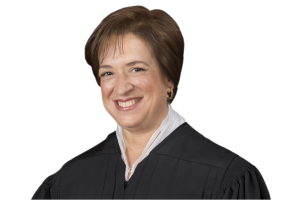
Elena Kagan
Joined by Roberts, Thomas, Breyer, Alito, Sotomayor, Gorsuch, Kavanaugh, and Barrett.
The holding
A federal court hearing state-law claims under the FSIA should determine the substantive law by using the same choice-of-law rule applicable in a similar suit against a private party. Justice Elena Kagan authored the unanimous opinion holding that, in this case, that means applying the forum state’s choice-of-law rule, not a rule deriving from federal common law. Although the FSIA generally recognizes foreign sovereign immunity absent a statutory exception, it does not affect the substantive law determining the liability of a foreign state when the entity is not immune from suit. Rather, in that situation, the foreign state is subject to the same substantive law as a private party. In this case, Section 1606 requires the use of California’s choice-of-law rule.
Argued by
- David Boies for the Petitioners
- Masha G. Hansford for the United States, as amicus curiae, supporting the Petitioners
- Thaddeus J. Stauber for the Respondent
Case path
- Sep 30, 2021 granted
- Jan 18, 2022 argued
- Apr 21, 2022 decided