Hughes v. Northwestern University
Petitioner April Hughes, et al. · Respondent Northwestern University, et al.
- Reporter
- 595 U.S. ___ (2022)
- From
- United States Court of Appeals for the Seventh Circuit
- How it got here
- writ of <i>certiorari</i>
Are allegations that a defined-contribution retirement plan paid or charged its participants fees that substantially exceeded fees for alternative available investment products or services sufficient to state a claim against plan fiduciaries for breach of the duty of prudence under the Employee Retirement Income Security Act of 1974 (ERISA)?
Question before the CourtWhat happened
Northwestern University offers two employee investment plans that are at issue in this case, a Retirement Plan in which Northwestern makes a matching contribution and a Voluntary Savings plan in which the University does not match. Laura Divane and other plaintiffs are beneficiaries of one or both of the employee investment plans. The plaintiffs sued Northwestern University for allegedly breaching its fiduciary duties under the Employee Retirement Income Security Act (ERISA), 29 U.S.C. § 1001, et seq. The plaintiffs alleged that Northwestern breached its fiduciary duty by offering a stock account option with excessive fees and a history of underperformance. The district court found no breach, noting that participants could have avoided any problems with the undesirable funds by simply choosing other options. The U.S. Court of Appeals for the Seventh Circuit affirmed.
Unanimous.
All nine justices agreed on the outcome. Concurrences may differ on reasoning, but the Court spoke with one voice on the judgment.
The opinions 1
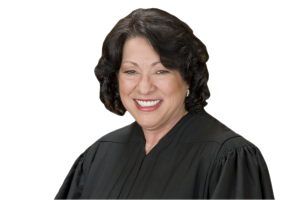
Sonia Sotomayor
Joined by Roberts, Thomas, Breyer, Alito, Kagan, Gorsuch, and Kavanaugh.
The holding
An allegation that fiduciaries breached their duty of prudence requires a context-specific inquiry involves assessing the fiduciaries’ duty to monitor all plan investments and remove any imprudent ones, which the Seventh Circuit below failed to do. Justice Sonia Sotomayor authored the opinion for the unanimous (8-0) Court. ERISA imposes a duty of prudence on fiduciaries that includes, among other things, a duty to monitor investments and remove imprudent ones. The mere fact that participants could have chosen lower-priced investments neither refutes nor supports whether fiduciaries fulfilled their duty of prudence. The court of appeals’ reliance on investor choice in reaching its conclusion for the University failed to make the proper inquiry. Justice Amy Cony Barrett took no part in the consideration or decision of the case.
Argued by
- David C. Frederick for the Petitioners
- Michael R. Huston for the United States, as amicus curiae, supporting the Petitioners
- Gregory G. Garre for the Respondents
Case path
- Jul 2, 2021 granted
- Dec 6, 2021 argued
- Jan 24, 2022 decided