Minerva Surgical v. Hologic
Petitioner Minerva Surgical, Inc. · Respondent Hologic, Inc., et al.
- Reporter
- 594 U.S. ___ (2021)
- From
- United States Court of Appeals for the Federal Circuit
- How it got here
- writ of <i>certiorari</i>
May a defendant in a patent infringement action who assigned the patent, or is in privity with an assignor of the patent, have a defense of invalidity heard on the merits?
Question before the CourtWhat happened
Hologic, Inc. and another company sued Minerva Surgical, Inc. for patent infringement (U.S. Patent Nos. 6,872,183 and 9,095,348). The patents relate to procedures and devices for endometrial ablation, which is a treatment involving the destruction of the lining of the uterus in order to treat menorrhagia, or abnormally heavy menstrual bleeding. Both of the patents at issue list as an inventor Csaba Truckai, who assigned his interests in both patents to NovaCept, Inc., a company he co-founded. NovaCept was subsequently acquired by another company, and Hologic acquired that company. Hologic is the current assignee of both patents and sells the resulting NovaSure system throughout the United States. Truckai left NovaCept and, in 2008, founded the accused infringer in this case, Minerva Surgical. Truckai and others at Minerva developed the Endometrial Ablation System (EAS), which received FDA approval in 2015 for the same indication as Hologic’s NovaSure system. In 2015, Hologic sued Minerva alleging that Minerva’s EAS infringed certain claims of its patents. Minerva asserted that the patents were invalid based on lack of enablement and failure to provide an adequate written description, and moreover were not patentable due to prior art. Hologic moved for summary judgment based on the doctrine of assignor estoppel, which bars a patent’s seller from attacking the patent’s validity in subsequent patent infringement litigation. The court granted the motion as to both patents, based on the relationship between the inventor Truckai and his company Minerva. The court of appeals affirmed as to the infringement.
Cross-aisle coalition.
The split did not track the usual ideological lines — justices from both wings landed on the same side.
The opinions 3
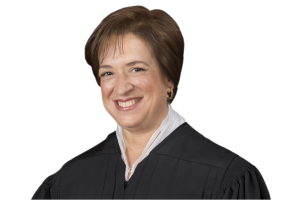
Elena Kagan
Joined by Roberts, Breyer, Sotomayor, and Kavanaugh.

Samuel A. Alito Jr.
Joined by Thomas and Gorsuch.

Amy Coney Barrett
Joined by Thomas and Gorsuch.
The holding
A defendant in a patent infringement action who assigned the patent can be barred under the doctrine of assignor estoppel from asserting a defense of invalidity if, and only if, the assignor’s claim of invalidity contradicts explicit or implicit representations the assignor made in assigning the patent. Justice Elena Kagan authored the 5-4 majority opinion of the Court. The doctrine of assignor estoppel dates back to late 18th-century England, and the U.S. Supreme Court first recognized and approved it in American jurisprudence in Westinghouse Electric & Manufacturing Co. v. Formica Insulation Co., 266 U.S. 342 (1924). The doctrine is grounded in a principle of fairness, that an inventor should not be able to assert invalidity of a patent he assigned but can merely argue about how to construe the patent’s claims. The Court refused to abandon the doctrine of assignor estoppel entirely, finding that doing so would have broad effects that contradict many of the Court’s precedents. Moreover, the principle of fairness that originally grounded the doctrine applies equally still. Specifically, when an inventor warrants that a patent claim is valid and then assigns it to another, his denial of the validity violates norms of equitable dealing. However, to fully serve that purpose of fairness, the doctrine has its limits. If the assignor did not make explicit or implicit representations that conflict with the invalidity defense, there is no ground for applying assignor estoppel. In this case, the Federal Circuit erred by not considering whether Hologic’s new claim was materially broader than the ones Truckai had assigned, which would mean that Truckai could not have warranted its validity when making the assignment. Justice Samuel Alito authored a dissenting opinion, arguing that the majority avoids answering the essential threshold question whether Westinghouse should be overruled and thus cannot answer the question presented in the petition in this case. Justice Alito would therefore dismiss the writ as improvidently granted. Justice Amy Coney Barrett authored a dissenting opinion, in which Justices Clarence Thomas and Neil Gorsuch joined, arguing that the majority recrafted a rule of assignor estoppel entirely different from that in Westinghouse. Because the Patent Act of 1952 does not incorporate the doctrine of assignor estoppel, Justice Barrett would hold the doctrine no longer applies.
Argued by
- Robert N. Hochman For the Petitioner
- Matthew M. Wolf For the Respondents
- Morgan L. Ratner For the United States, as amicus curiae, supporting neither party
Case path
- Jan 8, 2021 granted
- Apr 21, 2021 argued
- Jun 29, 2021 decided