Niz-Chavez v. Garland
Petitioner Augusto Niz-Chavez · Respondent Merrick B. Garland, Attorney General
- Reporter
- 593 U.S. ___ (2021)
- From
- United States Court of Appeals for the Sixth Circuit
- How it got here
- writ of <i>certiorari</i>
Under Section 1229(a), must the government serve a specific document that includes all required information, or may the government serve that information over the course of multiple documents?
Question before the CourtWhat happened
Agusto Niz-Chavez, a Guatemalan native and citizen, came to the United States without inspection in 2005. On March 26, 2013, he was served with a notice to appear before an immigration judge at a date and time to be determined later, and approximately two months later, on May 29, 2013, he received a notice of hearing in removal proceedings. Niz-Chavez made an appearance at the hearing on June 25, 2013, where he conceded removability and stated his intent to seek withholding of removal under the Immigration and Nationality Act (INA) and relief under the Convention Against Torture. After a hearing on the merits, the immigration judge denied both applications, and Niz-Chaves appealed to the Board of Immigration Appeals. In addition to challenging the immigration judge’s conclusions, Niz-Chavez asked the Board to remand the case in light of the Supreme Court’s intervening decision in Pereira v. Sessions, in which the Court held that a notice to appear that does not include the specific time and place of the noncitizen's removal proceedings does not trigger the stop-time rule under §1229(a) of the INA. Niz-Chavez argued that under Pereira, he was now eligible for cancellation because of the deficiency of the notice to appear he received. The Board affirmed the immigration judge’s decision and denied the motion to remand, finding that Niz-Chavez was not eligible for cancellation under Pereira. The U.S. Court of Appeals for the Sixth Circuit denied Niz-Chavez’s petition for review of each of the challenged decisions by the Board.
Cross-aisle coalition.
The split did not track the usual ideological lines — justices from both wings landed on the same side.
The opinions 2
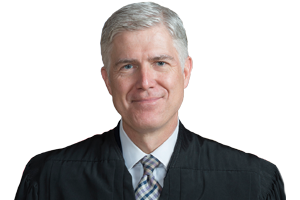
Neil Gorsuch
Joined by Thomas, Breyer, Sotomayor, Kagan, and Barrett.
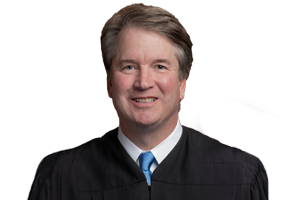
Brett M. Kavanaugh
Joined by Roberts and Alito.
The holding
The government must serve a single document that includes all the required information for the notice to appear to trigger the IIRIRA’s stop-time rule. Justice Neil Gorsuch authored the 6-3 majority opinion. Section 1229b(d)(1) states that the stop-time rule is triggered “when the alien is served a notice to appear under section 1229(a),” and Section 1229(a) states that “written notice...shall be given...to the alien...specifying” the time and place of his hearing, among other listed items. The singular article “a” (as in “a notice”) means, to an ordinary reader, a single document containing the required information, not a series of such document with the information spread across them. The IIRIRA’s statutory structure confirms this interpretation. For example, it refers to “the Notice” and “the time of the notice” in other nearby provisions (emphasis added). Its history, too, supports this reading. In passing the IIRIRA, the Congress intentionally changed the law from authorizing the government “to specify the time and place for an alien’s hearing ‘in the order to show cause or otherwise’” to requiring that the “time and place information...be included in a notice to appear, not ‘or otherwise.’” Justice Brett Kavanaugh authored a dissenting opinion, joined by Chief Justice John Roberts and Justice Samuel Alito, arguing that the government’s provision of notice in two documents, as was the case here, should be sufficient to trigger the stop-time rule.
Argued by
- David J. Zimmer for the petitioner
- Anthony A. Yang for the respondent
Case path
- Jun 8, 2020 granted
- Nov 9, 2020 argued
- Apr 29, 2021 decided