Facebook v. Duguid
Petitioner Facebook, Inc. · Respondent Noah Duguid
- Reporter
- 592 U.S. ___ (2021)
- From
- United States Court of Appeals for the Ninth Circuit
- How it got here
- writ of <i>certiorari</i>
Does the definition of an "automatic telephone dialing system" in the Telephone and Consumer Protection Act of 1991 encompass any device that can “store” and “automatically dial” telephone numbers, even if the device does not “use a random or sequential number generator”?
Question before the CourtWhat happened
Noah Duguid brought this lawsuit because Facebook sent him numerous automatic text messages without his consent. Duguid did not use Facebook, yet for approximately ten months, the social media company repeatedly alerted him by text message that someone was attempting to access his (nonexistent) Facebook account. Duguid sued Facebook for violating a provision of the Telephone and Consumer Protection Act of 1991 that forbids calls placed using an automated telephone dialing system (“ATDS”), or autodialer. Facebook moved to dismiss Duguid’s claims for two alternate reasons. Of relevance here, Facebook argued that the equipment it used to send text messages to Duguid is not an ATDS within the meaning of the statute. The district court dismissed the claim, and a panel of the U.S. Court of Appeals for the Ninth Circuit reversed, finding Facebook’s equipment plausibly falls within the definition of an ATDS. TCPA defines an ATDS as a device with the capacity “to store or produce telephone numbers to be called, using a random or sequential number generator.” Ninth Circuit precedent further clarifies that an ATDS “need not be able to use a random or sequential generator to store numbers,” only that it “have the capacity to store numbers to be called and to dial such numbers automatically.”
Unanimous.
All nine justices agreed on the outcome. Concurrences may differ on reasoning, but the Court spoke with one voice on the judgment.
The opinions 2
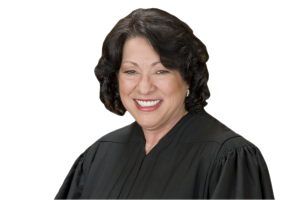
Sonia Sotomayor
Joined by Roberts, Thomas, Kagan, Gorsuch, Kavanaugh, Barrett, and Breyer.
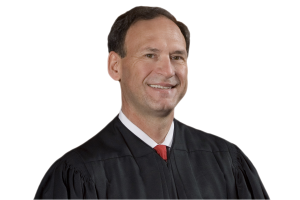
Samuel A. Alito Jr.
Joined by Roberts, Thomas, Kagan, Gorsuch, Kavanaugh, Barrett, and Breyer.
The holding
Under the Telephone Consumer Protection Act of 1991, to qualify as an “automatic telephone dialing system,” a device must have the capacity either to store or to produce a telephone number using a random or sequential number generator. Justice Sonia Sotomayor authored the opinion of the Court. Section 227(a)(1) defines an autodialer as “equipment which has the capacity...to store or produce telephone numbers to be called, using a random or sequential number generator; and to dial such numbers.” Contrary to Duguid’s contention, the clause “using a random or sequential number generator” modifies both verbs to “store” and to “produce” telephone numbers. Because Facebook’s notification system neither stores nor produces numbers “using a random or sequential number generator,” it is not an autodialer. Justice Samuel Alito filed an opinion concurring in the judgment to caution about the majority’s overreliance on a canon of statutory construction, that “when there is a straightforward, parallel construction that involves all nouns or verbs in a series,’ a modifier at the end of the list ‘normally applies to the entire series.’”
Argued by
- Paul D. Clement for the petitioner
- Jonathan Y. Ellis for the United States, as amicus curiae, supporting the petitioner
- Bryan A. Garner for the respondents
Case path
- Jul 9, 2020 granted
- Dec 8, 2020 argued
- Apr 1, 2021 decided