Pereida v. Wilkinson
Petitioner Clemente Avelino Pereida · Respondent Robert M. Wilkinson, Acting Attorney General
- Reporter
- 592 U.S. ___ (2021)
- From
- United States Court of Appeals for the Eighth Circuit
- How it got here
- writ of <i>certiorari</i>
Does a criminal conviction bar a noncitizen from applying for relief from removal when the record of conviction is ambiguous as to whether it corresponds to an offense listed in the Immigration and Nationality Act?
Question before the CourtWhat happened
Clemente Avelino Pereida, a native and citizen of Mexico, pleaded no contest to a criminal charge in Nebraska, arising from his attempt to use a fraudulent social security card to obtain employment. The Department of Homeland Security initiated removal proceedings against Pereida, and Pereida sought cancellation of the removal application. At issue is whether Pereida's criminal attempt conviction qualifies as a crime involving moral turpitude; if so, under the Immigration and Nationality Act, Pereida would be ineligible for cancellation of removal. The U.S. Court of Appeals for the Eighth Circuit held that it was Pereida’s burden to establish his eligibility for cancellation of removal. However, the court determined that it was not possible to ascertain which statutory subsection formed the basis for Pereida's conviction, so Pereida failed to meet his burden. Because Pereida did not establish that he was eligible for cancellation of removal, the court upheld the Board of Immigration Appeals’ determination that he did not show such eligibility and denied Pereida’s petition for review.
5–0.
A narrow margin — the Court split hard on this one. Read the concurrences carefully.
The opinions 2
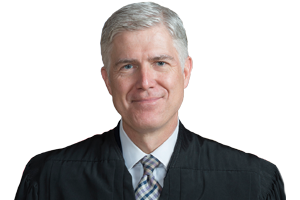
Neil Gorsuch
Joined by Roberts, Thomas, Alito, and Kavanaugh.
Stephen G. Breyer
Joined by Sotomayor, Kagan, and Barrett.
The holding
A nonpermanent resident seeking to cancel a lawful removal order must show that he has not been convicted of a disqualifying offense when the statutory conviction on his record is ambiguous regarding whether a disqualifying offense formed the basis of his conviction. Justice Neil Gorsuch authored the 5-3 majority opinion. The Court first looked to the text of the relevant provision of the Immigration and Nationality Act (INA), 8 U.S.C. § 1229a(c)(4)(A), which states that “an alien applying for relief or protection from removal has the burden of proof to establish” that he “satisfies the applicable eligibility requirements” and thus deserves a favorable exercise of discretion to cancel the removal order. One of these requirements is that they have not been convicted of a disqualifying criminal offense, such as crimes involving “moral turpitude.” Failure to show even one of these requirements is a failure to meet one’s burden, so Pereida’s failure to prove that the basis of his conviction was not a crime involving moral turpitude meant he failed to meet his burden. This interpretation is supported as well by the context of the INA and a similar requirement of noncitizens who seek admission. Justice Stephen Breyer authored a dissenting opinion, in which Justices Sonia Sotomayor and Elena Kagan joined. Justice Breyer argued that the Court should apply the so-called “categorical approach” to determine the nature of a crime that a noncitizen was convicted of committing—an approach the Court has “clearly and repeatedly” embraced in the INA context. That approach would require a judge to look only at certain specified documents, and unless those documents show the crime of conviction is a crime involving moral turpitude, the judge must find the conviction was not such a crime. Following that approach in this case would result in a finding that Pereida was not convicted for a disqualifying crime. Justice Amy Coney Barrett took no part in the consideration or decision of the case.
Argued by
- Brian P. Goldman For the Petitioner
- Jonathan C. Bond For the Respondent
Case path
- Dec 18, 2019 granted
- Oct 14, 2020 argued
- Mar 4, 2021 decided