Fulton v. City of Philadelphia
Petitioner Sharonell Fulton, et al. · Respondent City of Philadelphia, Pennsylvania, et al.
- Reporter
- 593 U.S. ___ (2021)
- From
- United States Court of Appeals for the Third Circuit
- How it got here
- writ of <i>certiorari</i>
1. To succeed on their free exercise claim, must plaintiffs prove that the government would allow the same conduct by someone who held different religious views, or only provide sufficient evidence that a law is not neutral and generally applicable? 2. Should the Court revisit its decision in Employment Division v. Smith? 3. Does the government violate the First Amendment by conditioning a religious agency’s ability to participate in the foster care system on taking actions and making statements that directly contradict the agency’s religious beliefs?
Question before the CourtWhat happened
In March 2018, the City of Philadelphia barred Catholic Social Services (CSS) from placing children in foster homes because of its policy of not licensing same-sex couples to be foster parents. CSS sued the City of Philadelphia, asking the court to order the city to renew their contract. CSS argued that its right to free exercise of religion and free speech entitled it to reject qualified same-sex couples because they were same-sex couples, rather than for any reason related to their qualifications to care for children. The district court denied CSS’s motion for a preliminary injunction, and the Third Circuit affirmed, finding that the City’s non-discrimination policy was a neutral, generally applicable law and that CSS had not demonstrated that the City targeted CSS for its religious beliefs or was motivated by ill will against its religion.
Unanimous.
All nine justices agreed on the outcome. Concurrences may differ on reasoning, but the Court spoke with one voice on the judgment.
The opinions 4
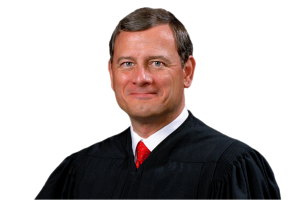
John G. Roberts Jr.
Joined by Sotomayor, Kagan, Breyer, Kavanaugh, and Thomas.

Amy Coney Barrett
Joined by Sotomayor, Kagan, Breyer, Kavanaugh, and Thomas.
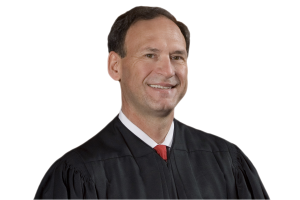
Samuel A. Alito Jr.
Joined by Sotomayor, Kagan, Breyer, Kavanaugh, and Thomas.
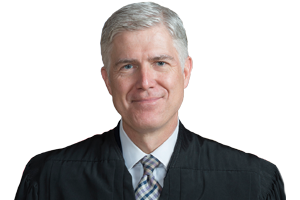
Neil Gorsuch
Joined by Sotomayor, Kagan, Breyer, Kavanaugh, and Thomas.
The holding
The refusal of Philadelphia to contract with CSS for the provision of foster care services unless CSS agrees to certify same-sex couples as foster parents violates the Free Exercise Clause of the First Amendment. Chief Justice John Roberts authored the majority opinion of the Court. Philadelphia’s actions burdened CSS’s religious exercise by forcing it either to curtail its mission or to certify same-sex couples as foster parents, in violation of its stated religious beliefs. Although the Court held in Employment Division v. Smith that neutral, generally applicable laws may incidentally burden religion, the Philadelphia law was not neutral and generally applicable because it allowed for exceptions to the anti-discrimination requirement at the sole discretion of the Commissioner. Additionally, CSS’s actions do not fall within public accommodations laws because certification as a foster parent is not “made available to the public” in the usual sense of the phrase. Thus, the non-discrimination requirement is subject to strict scrutiny, which requires that the government show the law is necessary to achieve a compelling government interest. The Court pointed out that the question is not whether the City has a compelling interest in enforcing its non-discrimination policies generally, but whether it has such an interest in denying an exception to CSS. The Court concluded that it did not. Justice Amy Coney Barrett wrote a separate concurring opinion in which Justice Brett Kavanaugh joined and in which Justice Stephen Breyer joined as to all but the first paragraph. Justice Barrett acknowledged strong arguments for overruling Smith but agreed with the majority that the facts of the case did not trigger Smith. Justice Samuel Alito authored an opinion concurring in the judgment, in which Justices Clarence Thomas and Neil Gorsuch joined. Justice Alito would overrule Smith, replacing it with a rule that any law that burdens religious exercise must be subject to strict scrutiny. Justice Gorsuch authored an opinion concurring in the judgment, in which Justices Thomas and Alito joined, criticizing the majority’s circumvention of Smith.
Argued by
- Lori H. Windham for the petitioners
- Hashim M. Mooppan for the United States, as amicus curiae, supporting the petitioners
- Neal Kumar Katyal for respondents Philadelphia et al.
- Jeffrey L. Fisher for respondents Support Center for Child Advocates and Philadelphia Family Pride
Case path
- Feb 24, 2020 granted
- Nov 4, 2020 argued
- Jun 17, 2021 decided