Jones v. Mississippi
Petitioner Brett Jones · Respondent Mississippi
- Reporter
- 593 U.S. ___ (2021)
- From
- Supreme Court of Mississippi
- How it got here
- writ of <i>certiorari</i>
Does the Eighth Amendment require a sentencing authority to find that a juvenile is permanently incorrigible before it may impose a sentence of life without the possibility of parole?
Question before the CourtWhat happened
When Brett Jones was fifteen years old, he stabbed his grandfather to death. He was convicted of murder, and the Circuit Court of Lee County, Mississippi, imposed a mandatory sentence of life imprisonment, and Mississippi law made him ineligible for parole. The appellate court affirmed his conviction and sentence. In a post-conviction relief proceeding, the Supreme Court of Mississippi ordered that Jones be resentenced after a hearing to determine whether he was entitled to parole eligibility. Subsequently, the U.S. Supreme Court decided Miller v. Alabama, 567 U.S. 460 (2012), and Montgomery v. Louisiana, 577 U.S. __ (2016). In Miller, the Court held that mandatory life in prison without the possibility of parole sentences for juveniles violated the Eighth Amendment’s prohibition on cruel and unusual punishments. And in Montgomery, it clarified that Miller barred life without the possibility of parole “for all but the rarest of juvenile offenders, those whose crimes reflect permanent incorrigibility.” The circuit court held the hearing weighing the factors laid out in Miller and determined Jones was not entitled to parole eligibility.
6–0.
A narrow margin — the Court split hard on this one. Read the concurrences carefully.
The opinions 3
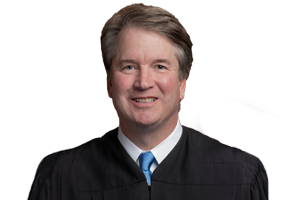
Brett M. Kavanaugh
Joined by Roberts, Alito, Gorsuch, and Barrett.
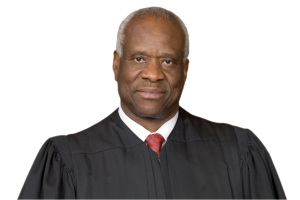
Clarence Thomas
Joined by Roberts, Alito, Gorsuch, and Barrett.

Sonia Sotomayor
Joined by Breyer and Kagan.
The holding
A sentencing authority need not find a juvenile is permanently incorrigible before imposing a sentence of life without the possibility of parole; a discretionary sentencing system is both constitutionally necessary and constitutionally sufficient to impose a sentence of life without parole on a defendant who committed a homicide when they were under 18. Justice Brett Kavanaugh authored the 6-3 majority opinion. In Miller v. Alabama, 567 U.S. 460 (2012), the Court held that “a sentencer [must] follow a certain process—considering an offender’s youth and attendant characteristics—before imposing” a life-without-parole sentence.” And in Montgomery v. Louisiana, 577 U.S. 190 (2016), the Court stated that “a finding of fact regarding a child’s incorrigibility . . . is not required.” Taken together, these two cases refute Jones’s argument that a finding of permanent incorrigibility is constitutionally necessary to impose a sentence of life without parole. The Court noted that it expresses neither agreement nor disagreement with Jones’s sentence, and its decision does not preclude states from imposing additional sentencing limits in cases involving juvenile commission of homicide. Justice Clarence Thomas authored an opinion concurring in the judgment, arguing that the Court should have reached the same outcome by declaring that Montgomery was incorrectly decided. Justice Sonia Sotomayor authored a dissenting opinion, in which Justices Stephen Breyer and Elena Kagan joined. Justice Sotomayor argued that the majority effectively circumvents stare decisis by reading Miller to require only “a discretionary sentencing procedure where youth is considered.” Under Montgomery, sentencing discretion is necessary, but under Miller, it is not sufficient. Rather, a sentencer must actually make the judgment that the juvenile is one of those rare children for whom life without parole is a constitutionally permissible sentence.
Argued by
- David M. Shapiro for the petitioner
- Krissy C. Nobile for the respondent
- Frederick Liu for the United States, as amicus curiae, supporting the respondent
Case path
- Mar 9, 2020 granted
- Nov 3, 2020 argued
- Apr 22, 2021 decided